Glyphosate in hummus and oat milk: an unexpected place it shows up, and a certification that held up
Glyphosate (the active ingredient in Round Up) shows up in some unexpected places. Canopy tested hummus and oat milk from popular brands, here's what we found.
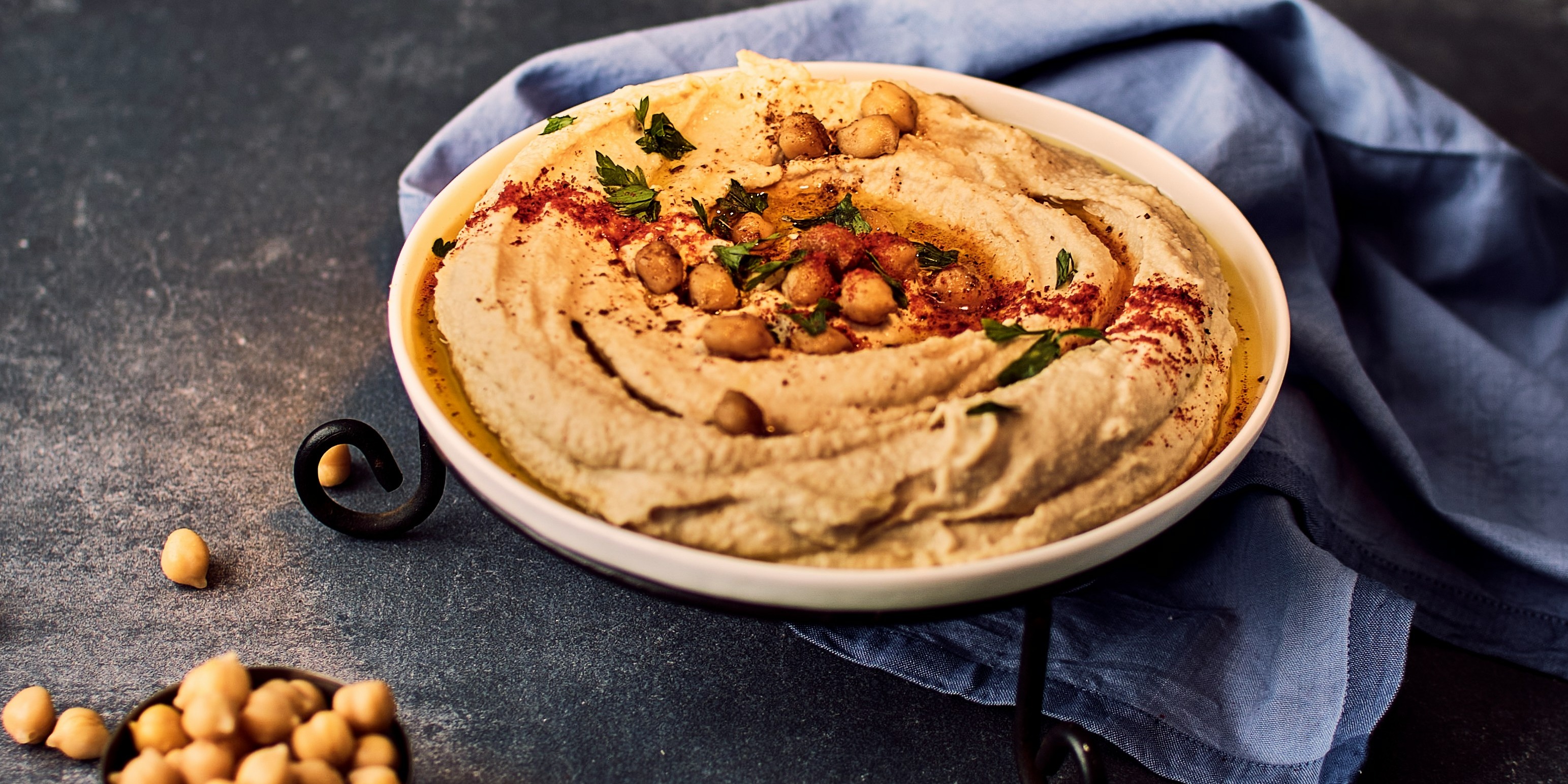
Chickpeas and oats can both be sprayed with glyphosate, the active ingredient in Roundup, in the days before harvest. So Canopy tested two fridge staples, with support from our community: Sabra Classic Hummus, the most recognizable hummus brand in the US, and Oatly Barista Edition, an oat milk that carries a "glyphosate residue free" certification. Here's what the lab found.
The results
Sabra Classic Hummus tested at 0.763 mg/kg glyphosate; AMPA, glyphosate's main breakdown product, wasn't detected. A labeled two-tablespoon serving delivers about 22.9 micrograms, roughly 2.3 times EWG's health guidance of 10 micrograms a day, and well under the Prop 65, EFSA, and EPA limits. If you eat a quarter cup instead of two tablespoons, you double your intake. Full result.
Oatly Barista Edition Oatmilk: neither glyphosate nor AMPA was detected at the lab's 0.01 mg/kg detection limit, consistent with the glyphosate residue free label on the carton. That's the outcome you want from a certification: the claim on the front of the package matches what an independent lab finds. Full result.
Hummus is not where most people expect this
Glyphosate coverage has mostly been about oats, because some growers spray the standing crop a week or two before harvest to dry it, a practice called preharvest desiccation. The residue arrives at the end of the season with no time to break down.
Chickpeas get the same treatment, and hummus is primarily chickpeas. EPA's glyphosate tolerance for the dried legume group that includes chickpeas is 5 ppm, against 30 ppm for cereal grains like oats (40 CFR 180.364). The 0.763 mg/kg reading sits well inside the 5 ppm legal ceiling and above the strictest health guidance, which is the gap between "legal" and "low."
Where EPA's glyphosate review stands
Glyphosate's health science is contested. In 2015 the WHO's cancer agency, IARC, classified it as a probable human carcinogen; EPA and EFSA have concluded it is unlikely to pose a cancer risk at expected exposures. That split is why the four guidance lines on our chart sit so far apart: EWG's 10 micrograms a day is built on the cancer assessments, and EPA's chronic reference dose of 1 mg per kilogram of body weight works out to about 68 mg a day for a 150 lb adult, a gap of several thousand-fold (guidance definitions).
EPA is now redoing its human health assessment as part of glyphosate's periodic registration review. In August it opened a literature-search protocol for public comment, and on September 22 it signed a memorandum of understanding with HHS that brings NIEHS, the National Toxicology Program, NCI, CDC, and FDA into the review. The announcement says the assessment will address "dietary exposure including from preharvest applications," with completion expected in early 2027 (EPA release). Preharvest application is the route that puts glyphosate in oats and chickpeas, so it's the right question. It also means nothing changes on the shelf for at least a year, and the only way to know what's in a specific food in the meantime is to test it.
The certification held
Oatly carries the Glyphosate Residue Free seal from The Detox Project, whose standard is no glyphosate at the lab's lower limit of detection, usually 10 parts per billion, verified by brand-paid annual testing (The Detox Project). Ten parts per billion is 0.01 mg/kg, the same limit our lab reports.
That made this a clean test of the claim: a carton bought at retail, checked by an independent qualified laboratory at the certification's own threshold. The results agree.
Six results side by side
| Product | Glyphosate | AMPA | Per labeled serving | EWG | Prop 65, EFSA, EPA |
|---|---|---|---|---|---|
| Sabra Classic Hummus | 0.763 mg/kg | not detected | 22.9 µg | Fail | Pass |
| Quaker Oatmeal Squares Brown Sugar | 0.612 mg/kg | 0.025 mg/kg | 35.7 µg | Fail | Pass |
| Cheerios | 0.01 mg/kg | not detected | 0.39 µg | Pass | Pass |
| Nature's Path Heritage Flakes | not detected | not detected | ND | Pass | Pass |
| Post Fruity Pebbles | not detected | not detected | ND | Pass | Pass |
| Oatly Barista Edition | not detected | not detected | ND | Pass | Pass |
The hummus had the highest concentration of anything we've tested, higher than the cereal from our first glyphosate post. It lands lower per serving only because a serving of hummus is two tablespoons and a serving of cereal is a cup. Concentration tells you what's in the food; serving size tells you how much you actually take in.
The spread is roughly 75-fold between the highest concentration and the lowest detected one, and three of six products came back with nothing detected. An oat milk came back with nothing detected alongside an oat cereal that didn't. Not all oats carry glyphosate residue, and the same is almost certainly true of chickpeas. Whether it's there depends on how the crop was treated before harvest.
What to test next
The most useful next data points are the other brands of the same two things. Open your fridge. If there's a hummus in it that isn't Sabra, the question is whether it lands in the same place. If there's an oat milk that isn't certified, the question is whether the non-detect is specific to the certification or common across the category. Nobody has that data yet.
Request a glyphosate test on any product at forcanopy.com/test-requests/new; the cost is split across everyone who pledges. To see either of these results repeated on a fresh lot, use "Test again" on the product page.
Ready to pool in? Open tests are waiting for backers right now.
Browse open tests →